NEBRASKA 4-H RALLY LEVELS
Beginning Rally
Youth and dog teams who have not shown in rally previously, youth in pre-beginning novice or beginning novice obedience, this level is designed for youth with minimal show experience. Dog is on leash and there are 5 to 10 stations. These beginning Rally signs are suggested-halt sit, halt down dog, right turn, left turn, about turn right, slow pace, fast pace, and normal pace. These are similar commands that exhibitors use in pre-beginning novice obedience and beginning novice levels.
(Signs in this level will be available for use in all other Rally levels)
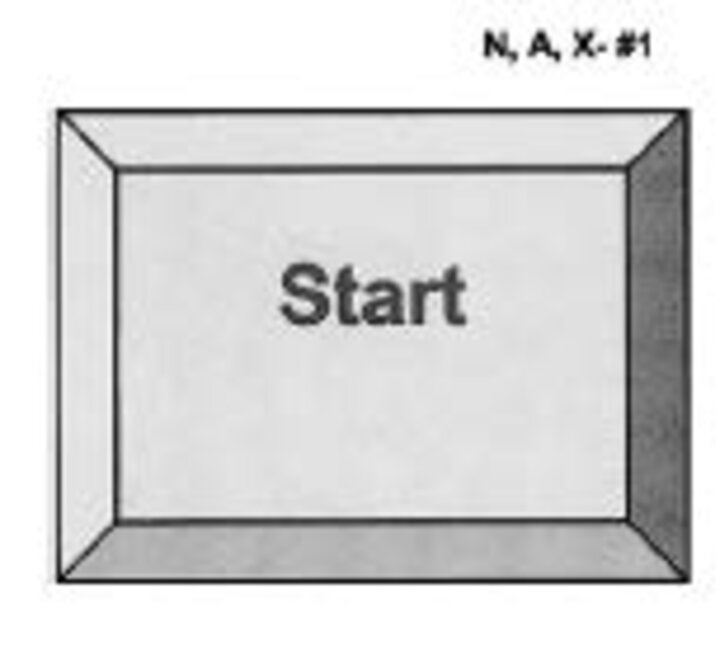
1. Start- Indicates the beginning of the course. Dog does not have to be sitting at start. |
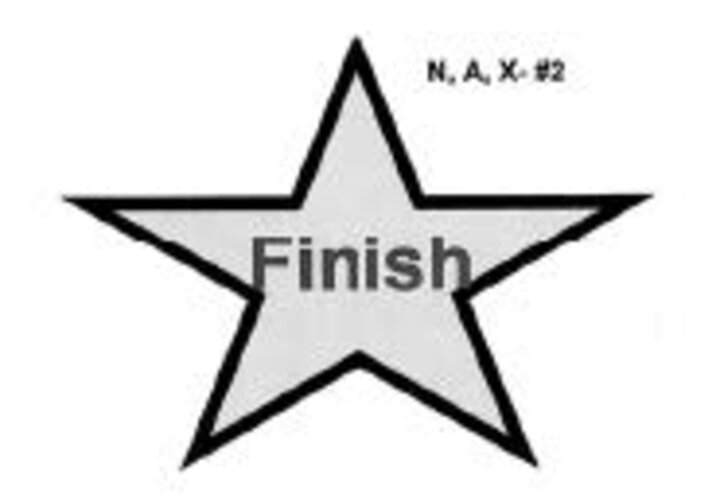
2. Finish- Indicates the end of the course-timing stops. |
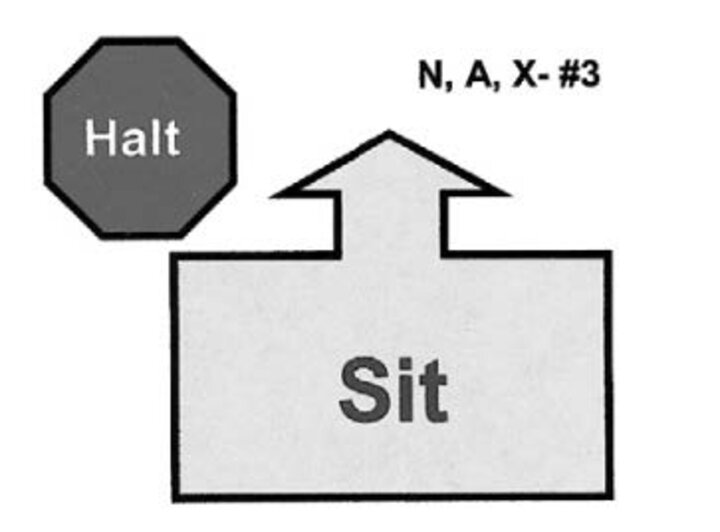
3. Halt- Sit – While heeling, the handler halts and the dog sits in heel position. The team then moves forward, with the dog in heel position. (Stationary exercise) |
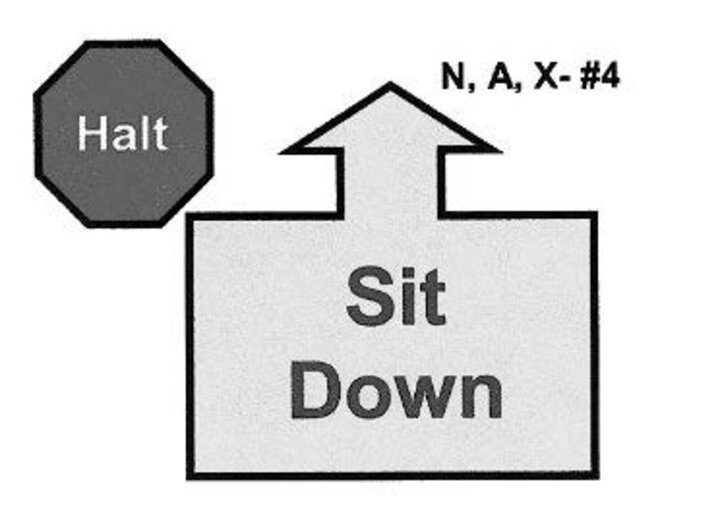
4. Halt- Down Dog – While heeling, the handler halts and the dog sits. The handler then commands and/or signals the dog to down, followed by the command to heel forward from the down position. (Stationary exercise) |
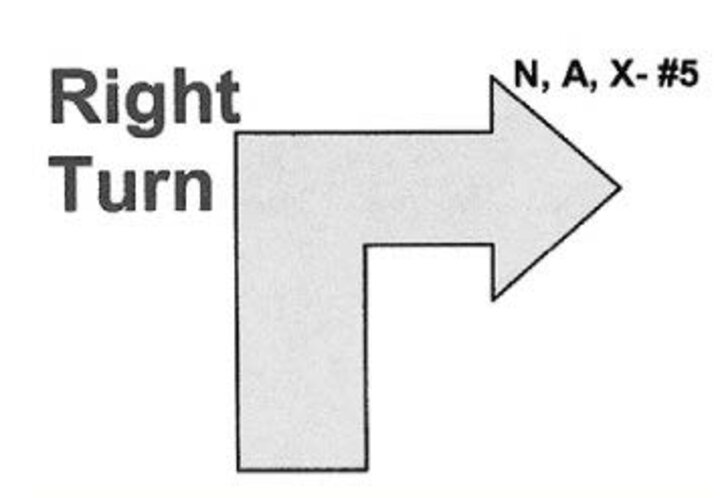
5. Right Turn – Performed as a 90° turn to the right, as in traditional obedience. |
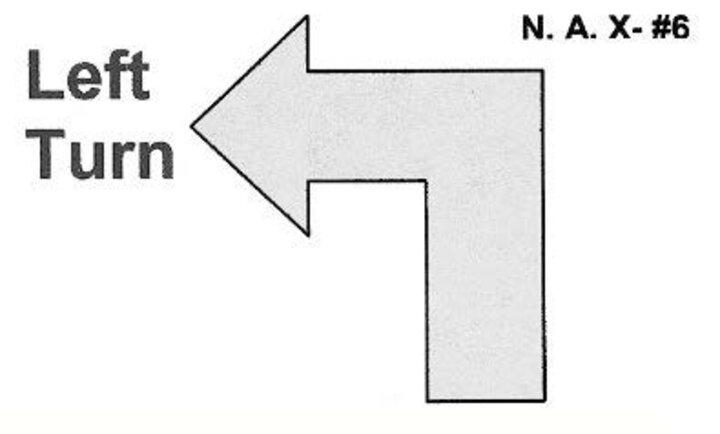
6. Left Turn – Performed as a 90° turn to the left, as in traditional obedience. |
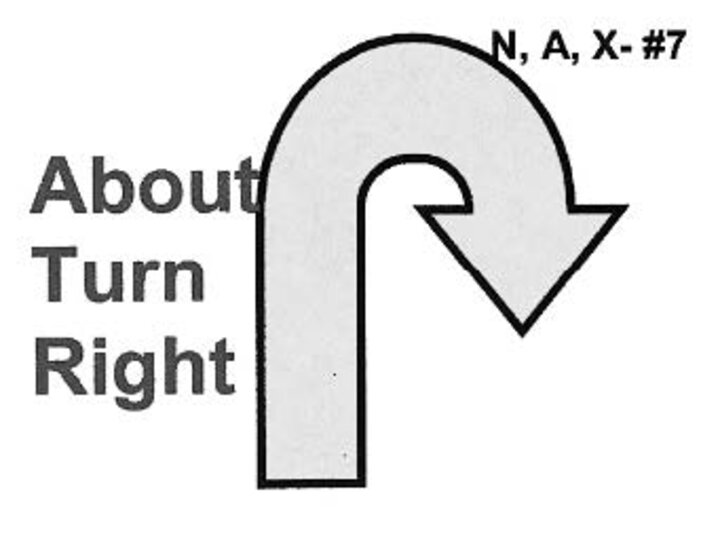
7. About Turn – Right – While heeling, the team makes a 180° about turn to the handler’s right. |
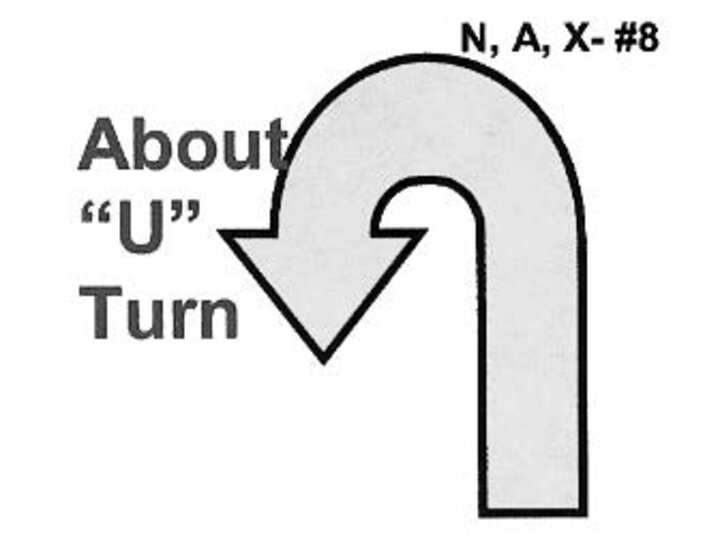
8. About “U” Turn – While heeling, the team makes a 180° turn to the handler’s left. |
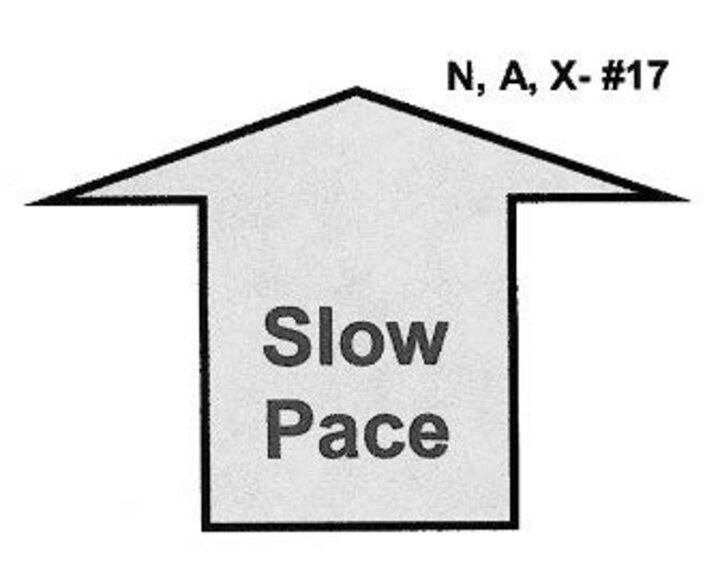
17. Slow Pace – Dog and handler must slow down noticeably. This must be followed by a normal pace unless it is the last station on the course. |
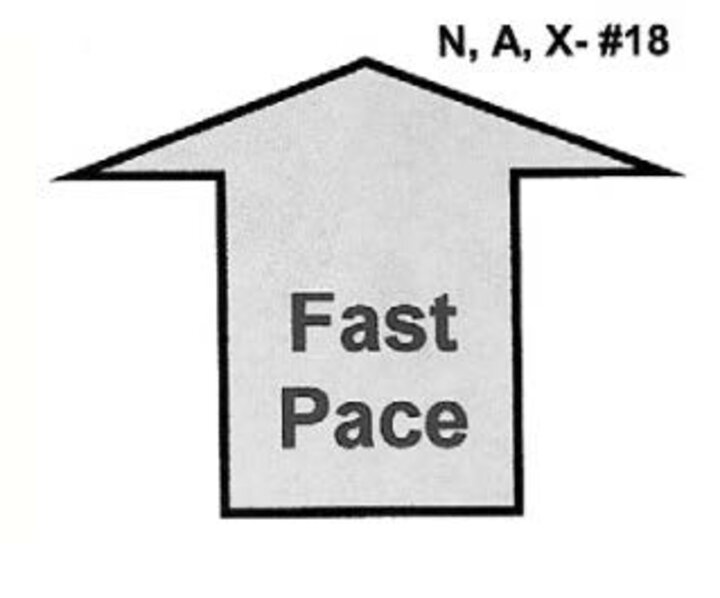
18. Fast Pace – Dog and handler must speed up noticeably. This must be followed by a normal pace. |

19. Normal Pace – Dog and handler must move forward, walking briskly and naturally. This station can only be used after a change of pace. |
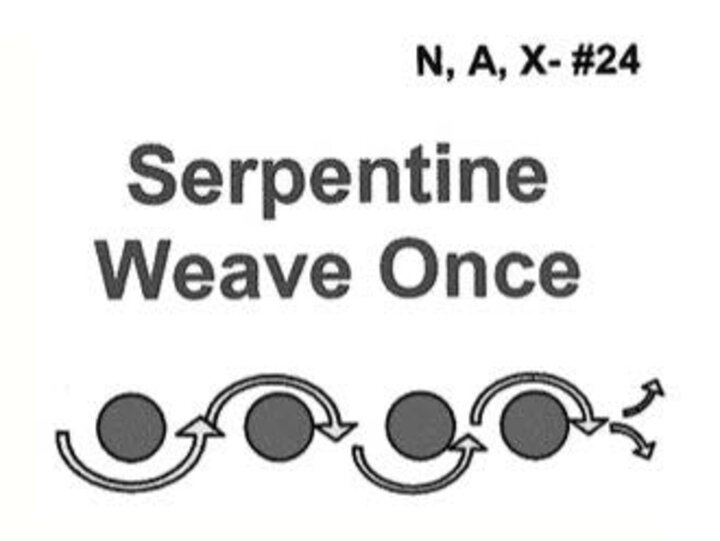
24. Serpentine Weave Once – This exercise requires pylons or posts placed in a straight line with spaces between them of approximately 6-8 feet. The exercise sign is placed near or on the first pylon or post where the exercise starts. Entry into the weaving pattern is with the first pylon or post at the dog/handler’s left side. The dog and handler must complete the entire exercise by passing the last pylon or post. It should be noted that in this exercise, the team does not weave back through the obstacles as they do in the Straight Figure 8. |
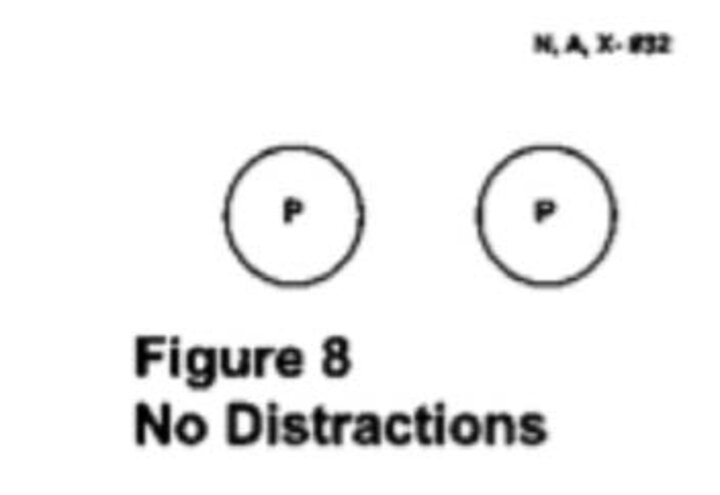
32. Figure 8 – No Distractions – Two pylons or posts spaced approximately 6-8 feet apart. The team enters the sequence with the posts on either left or right and will perform a complete figure 8 around the posts or pylons, crossing the center point three times. |
Rally 1
Youth who have received two purples in Beginning Rally should be placed in this level. Dog is on leash and there are 10 to 15 stations. In the Rally 1 level, exercises are performed on leash, and there are no jumps. The judge will give the order for the handler to begin the course. Signs (signs used in lower levels are available for use.)
Pictures of Signs
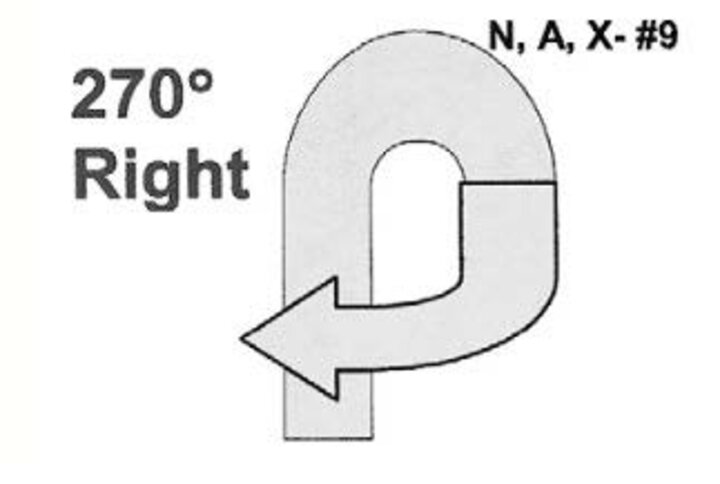
9. 270° Right Turn – While heeling, the team makes a 270° turn to the handler’s right. 270° turns are performed as a tight circle, but not around the exercise sign. |
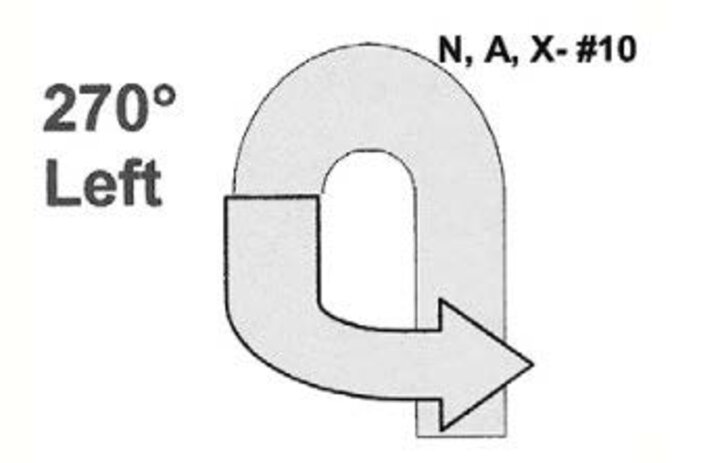
10. 270° Left Turn – While heeling, the team makes a 270° turn to the handler’s left. 270° turns are performed as a tight circle, but not around the exercise sign. |
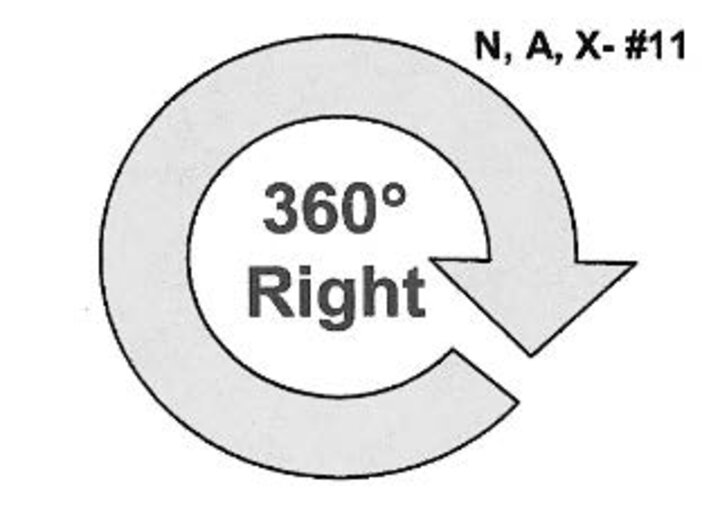
11. 360° Right Turn – While heeling, the team makes a 360° turn to the handler’s right. 360° turns are performed as a tight circle, but not around the exercise sign. |
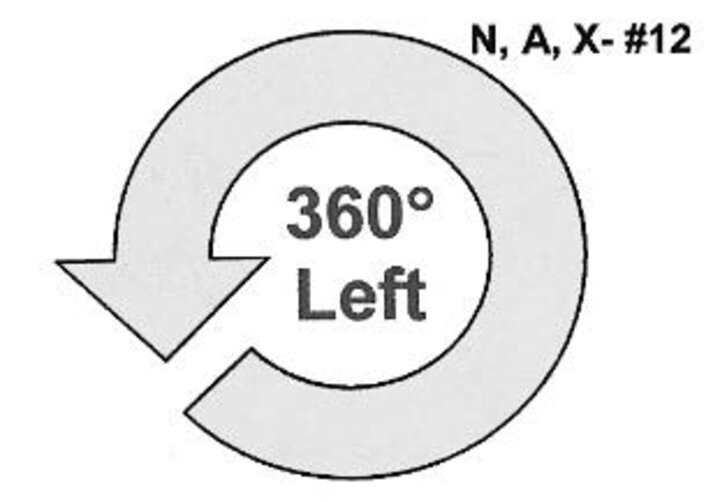
12. 360° Left Turn – While heeling, the team makes a 360° turn to the handler’s left. 360° turns are performed as a tight circle, but not around the exercise sign. |
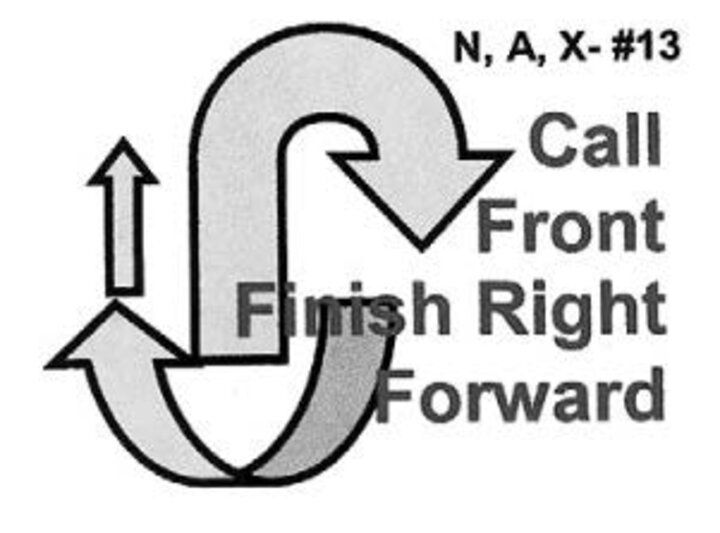
13. Call Front-Finish Right-Forward– While heeling, the handler stops forward motion and calls the dog to the front position (dog sits in front and faces the handler). The handler may take several steps backward as the dog turns and moves to sit in the front position. Second part of the exercise directs the handler to command and/or signal the dog to change from the front position by moving to the handler’s right, around behind the handler, toward heel position. As the dog clears the handler’s path,the handler moves forward before the dog has completely returned to the heel position. The dog does not sit before moving forward in heel position with the handler. Handler must not step forward or backward to aid the dog as the dog moves toward heel position. (Stationary exercise) |
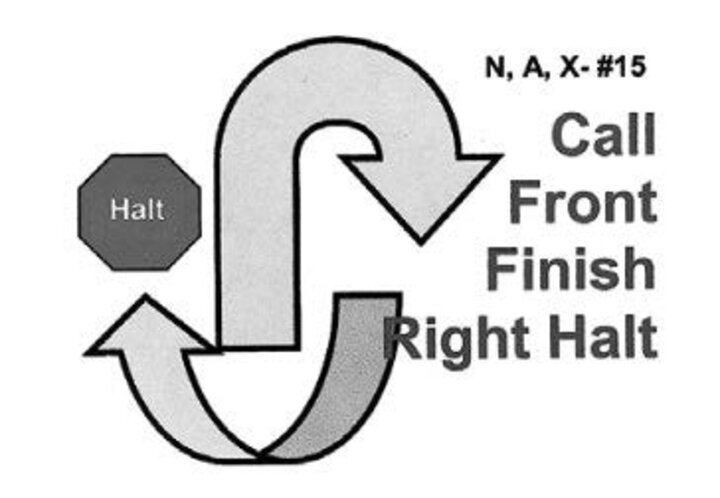
15. Call Front-Finish Right-Halt- While heeling, the handler stops forward motion and calls the dog to the front position (dog sits in front and faces the handler). The handler may take several steps backward as the dog turns and moves to sit in the front position. Second part is the finish to the right, where the dog must return to heel position by moving around the right side of the handler. Dog must sit in heel position before moving forward with the handler. Handler must not step forward or backward to aid the dog as the dog moves toward heel position. (Stationary exercise) |
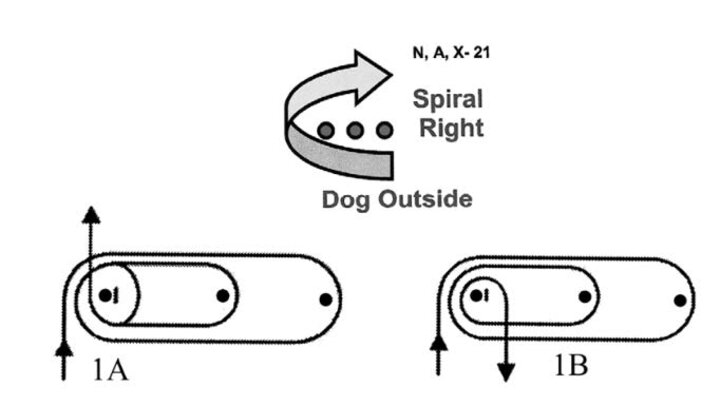
21. Spiral Right-Dog Outside– This exercise requires three pylons or posts placed in a straight line with spaces between them of approximately 6-8 feet. Spiral Right indicates the handler must turn to the right when moving around each pylon or post. This places the dog on the outside of the turns (see 1A and 1B). The exercise sign is placed near or on the first pylon or post where the spiral is started. |
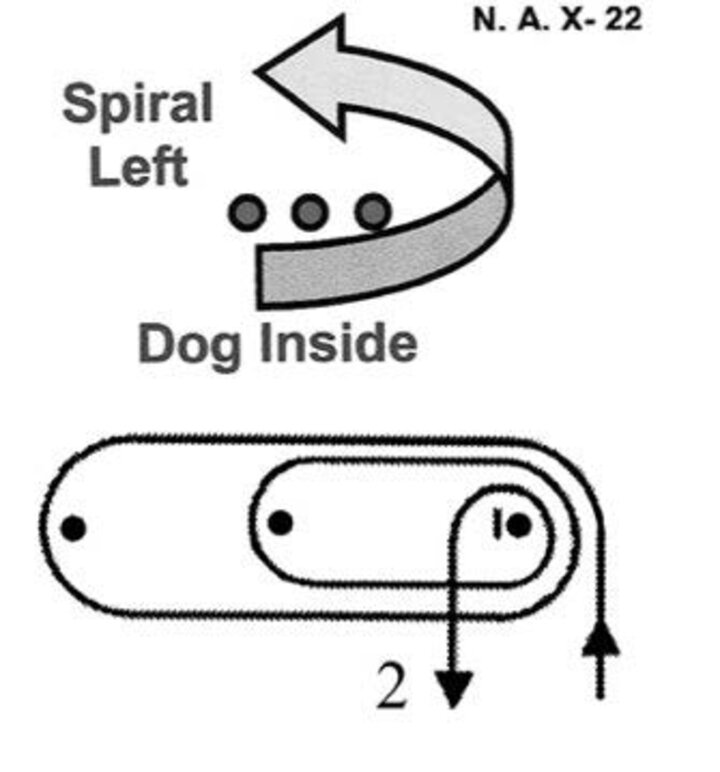
22. Spiral Left-Dog Inside– This exercise requires three pylons or posts placed in a straight line with spaces between them of approximately 6-8 feet. Spiral Left indicates that the handler must turn to the left when moving around each pylon or post. This places the dog on the inside of the turns (see 2). The exercise sign is placed near or on the first pylon or post where the spiral is started. |
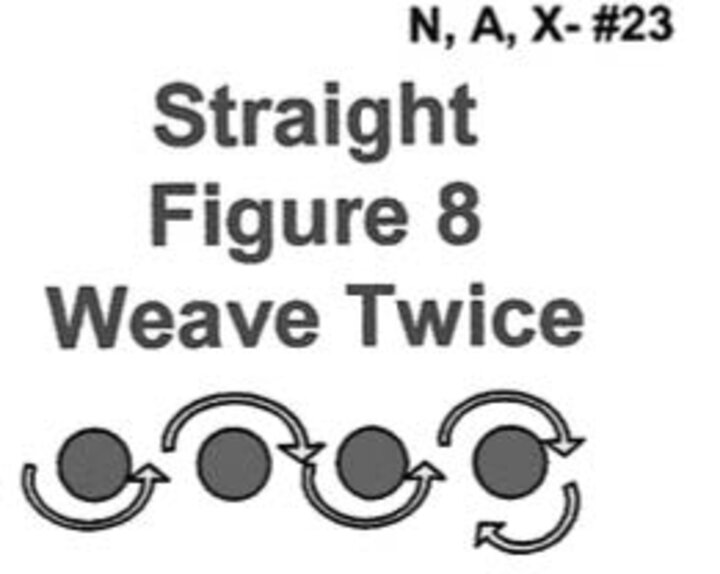
23. Straight Figure 8 Weave Twice– This exercise requires four pylons or posts placed in a straight line with spaces between them of approximately 6-8 feet. The exercise sign is placed near or on the first pylon or post where the exercise is started. Entry into the weaving pattern is with the first pylon or post at the dog/handler’s left side. The dog and handler must complete the entire exercise by passing the last pylon or post. |
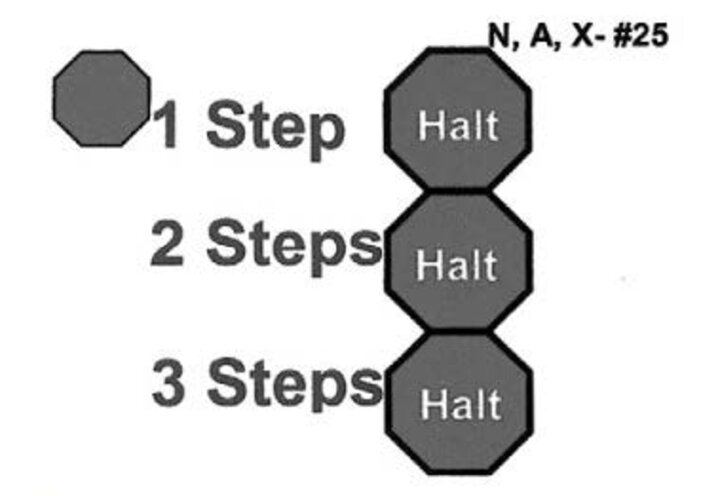
25. Halt 1, 2, and 3 Steps Forward – The handler halts, and the dog sits in heel position to begin the exercise. The handler takes one step forward and halts with the dog maintaining heel position. The dog sits when the handler halts. This is followed by two steps forward–halt, and three steps forward–halt, with the dog heeling each time the handler moves forward and sitting each time the handler halts. (Stationary exercise) |
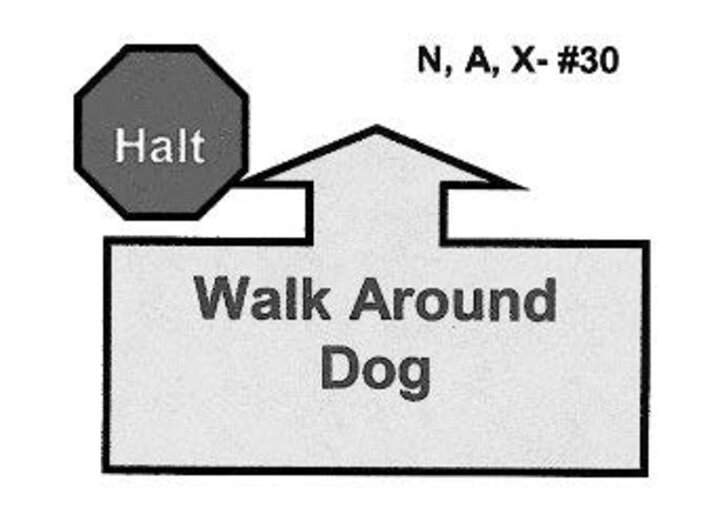
30. Halt-Walk Around Dog – Handler halts and dog sits. With the dog sitting in heel position, the handler commands and/or signals the dog to stay, then proceeds to walk around the dog to the left, returning to heel position. The handler must pause in heel position before moving forward to the next station. (Stationary exercise) |
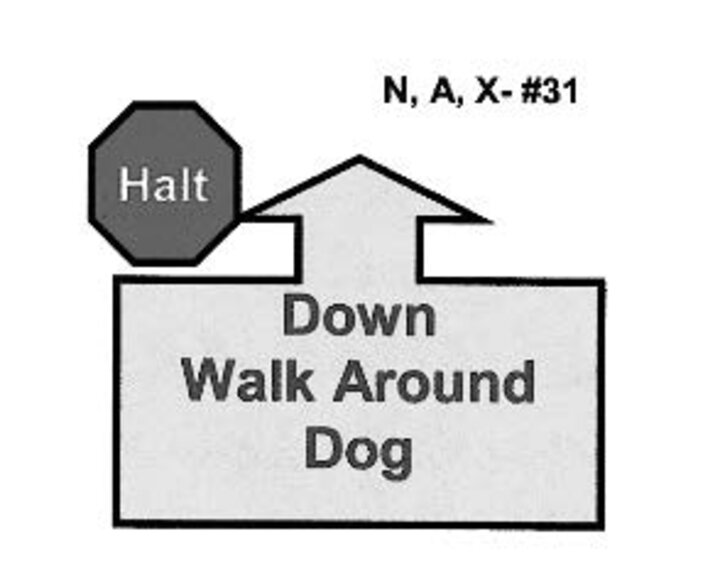
31. Halt-Down-Walk Around Dog – Handler halts and dog sits. With the dog sitting in heel position, the handler commands and/or signals the dog to down and stay, then proceeds to walk around the dog to the left, returning to heel position. The handler must pause in heel position before moving forward to the next station. The dog heels forward from the down position. (Stationary exercise) |
Rally 2
Youth in Novice Obedience or higher should be placed in this level. In the Rally 2 level, exercises are performed off leash, and there are no jumps. The judge will give the order for the handler to begin the course. This level will use the same signs as Rally 3 and there are 12-17 stations.
Rally 3
It is recommended that youth in Novice Obedience or higher should be placed in this level. In the Rally 3 level, exercises are performed off leash, and there are jumps involved. There are 15 to 20 stations.
JUMPS
The gate and/or ring steward will confirm with the handler the height the dog jumps. Rally 3 will be run in jump height order, unless prior arrangements have been made by a handler with the judge to run a dog out of order.
High Jump- consists of two uprights and solid boards of varying widths that combine to make each dog’s required jump height
Bar Jump- has two uprights that are constructed to support only a striped bar that is set at the dog’s required jump height. The bar jump may be used as a jump in both directions, the uprights must be offset to allow the bar to be knocked off from either direction.
High Jump and/or Bar Jump height requirements are as follows:
| Height of dog at withers | Height to be jumped |
| Less than 10 inches | 4 inches |
| 10 inches to less than 15 inches | 8 inches |
| 15 inches to less than 20 inches | 12 inches |
| 20 inches and over | 16 inches |
Broad Jump- In the ring, broad jump hurdles will be arranged in order of size from smallest to largest. They will be evenly spaced covering a distance equal to twice the height of the high jump set for each dog. Three boards will be used for a jump of 32 inches, two boards for a jump of 16 to 24 inches, and one board for a jump of 8 inches. When decreasing the number of boards in the jump, the highest hurdle will be removed first.
(Signs used in lower levels are available for use)
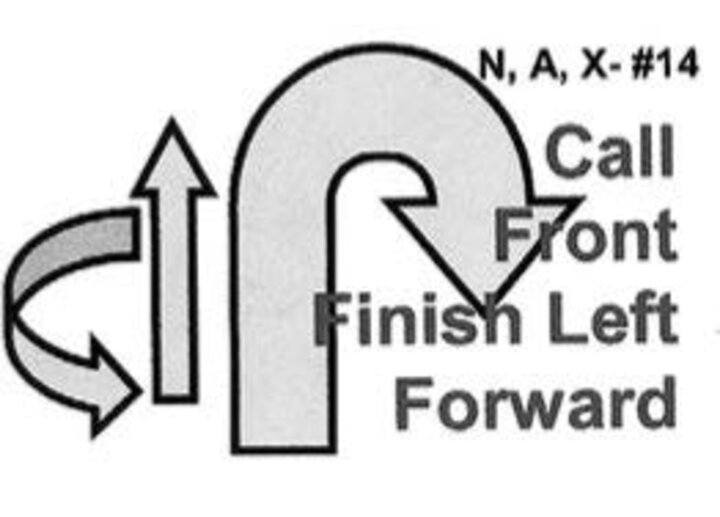
14. Call Front-Finish Left-Forward– While heeling, the handler stops forward motion and calls the dog to the front position (dog sits in front and faces the handler). The handler may take several steps backward as the dog turns and moves to sit in the front position. Second part of the exercise directs the handler to command and/or signal the dog to change from the front position by moving to the handler’s left toward heel position. As the dog clears the handler’s path, the handler moves forward before the dog has completely returned to the heel position. The dog does not sit before moving forward in heel position with the handler. Handler must not step forward or backward to aid the dog as the dog moves toward heel position. (Stationary exercise) |
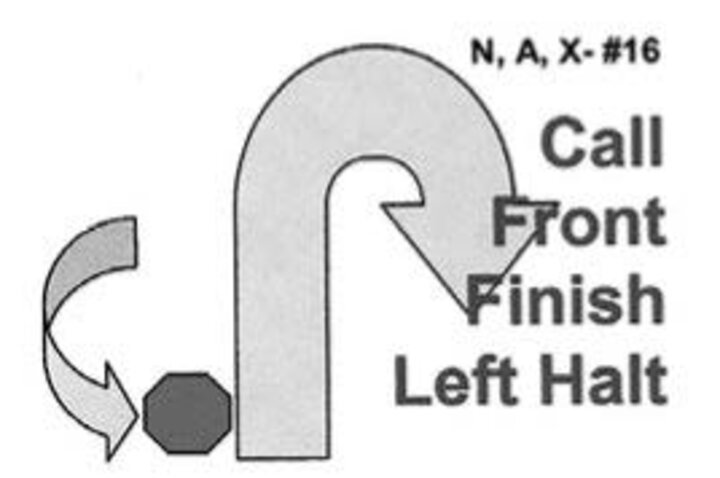
16. Call Front-Finish Left-Halt- While heeling, the handler stops forward motion and calls the dog to the front position (dog sits in front and faces the handler). The handler may take several steps backward as the dog turns and moves to a sit in the front position. Second part is the finish to the left, where the dog must return to heel position by moving around the left side of the handler and sit in heel position. Dog must sit in heel position before moving forward in heel position with the handler. Handler must not step forward or backward to aid the dog as the dog moves toward heel position. (Stationary exercise) |
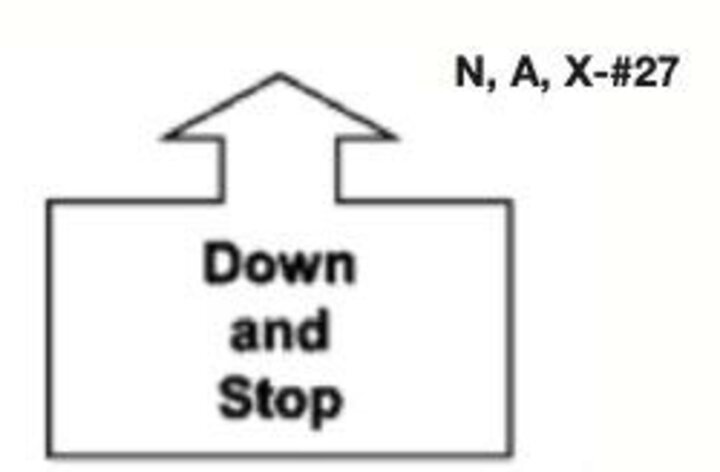
27. Down and Stop – While moving with the dog in heel position, the handler commands and/or signals the dog to down as the handler comes to a stop next to the dog. Once the dog is completely down, the handler moves forward, commanding the dog to move forward from down position. (Stationary exercise) |
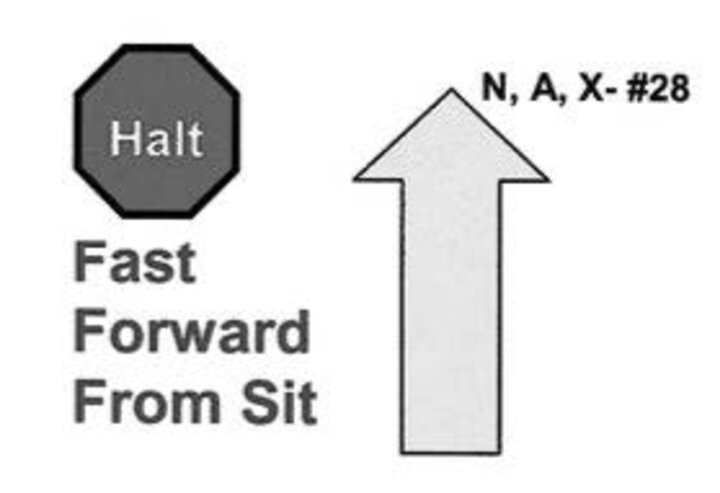
28. Halt-Fast Forward from Sit – The handler halts, and the dog sits in heel position. With the dog sitting in heel position, the handler commands and/or signals the dog to heel and immediately moves forward at a fast pace. This must be followed by a normal pace. (Stationary exercise) |
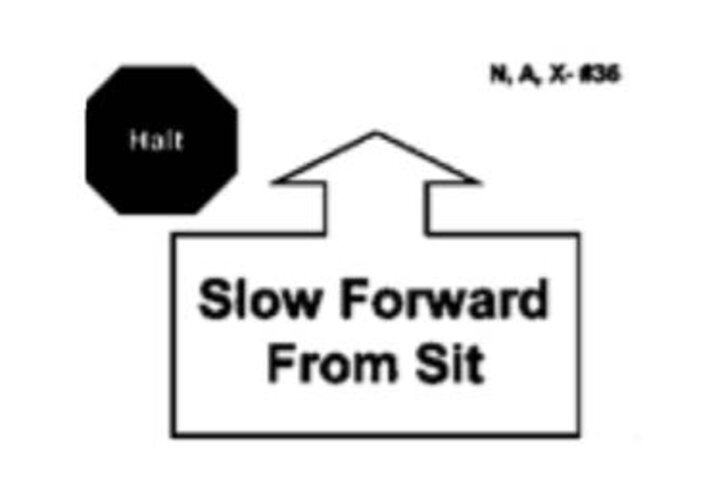
36. Halt-Slow Forward from Sit – The handler halts, and the dog sits in heel position. The handler then commands and/or signals the dog to heel and moves forward at a slow pace. The dog must maintain heel position as handler slowly moves forward. This must be followed by a normal pace unless it is the last station on the course. (Stationary exercise) |
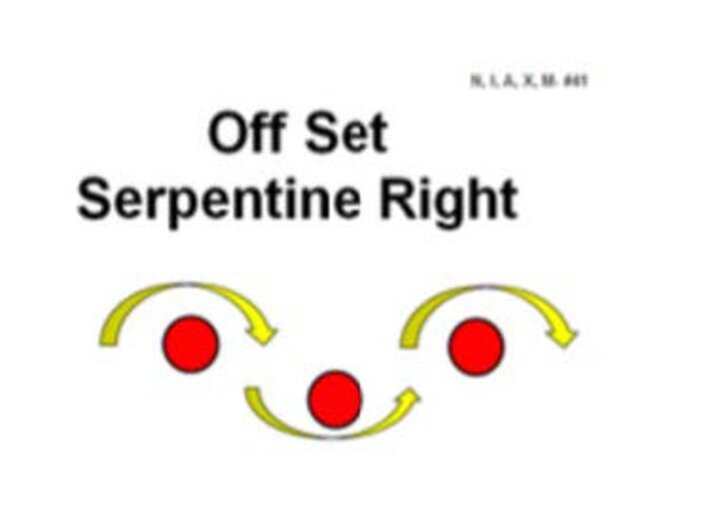
41. Offset Serpentine Right - This sign requires three pylons. The center pylon will be offset to the right by 3-4 feet with the other two spaced approximately 6-8 feet apart. The dog and handler will enter the weave with the first pylon on their right side. They must complete the entire serpentine together. |
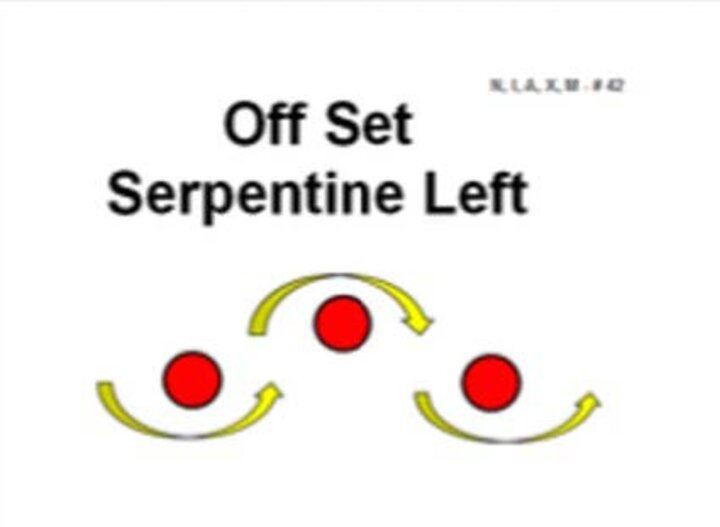
42. Offset Serpentine Left - This sign requires three pylons. The center pylon will be offset to the left by 3-4 feet with the other two spaced approximately 6-8 feet apart. The dog and handler will enter into the weave with the first pylon on their left side. They must complete the entire serpentine together. |
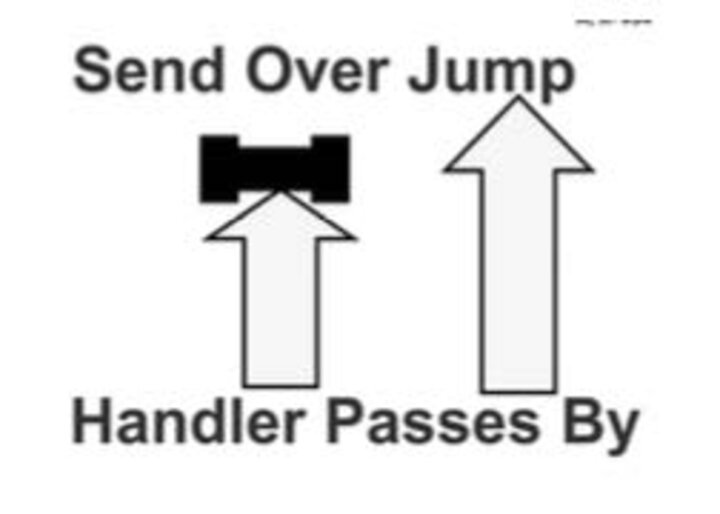
103. Send Over Jump- Handler Passes By – While moving with the dog in heel position, the handler directs the dog to take the jump as the handler passes by the jump without any pause, hesitation or stopping. When the dog has completed the jump in the proper direction, it is called to heel position and the team continues to the next exercise. The jump could be the bar jump, high jump, or the broad jump. |
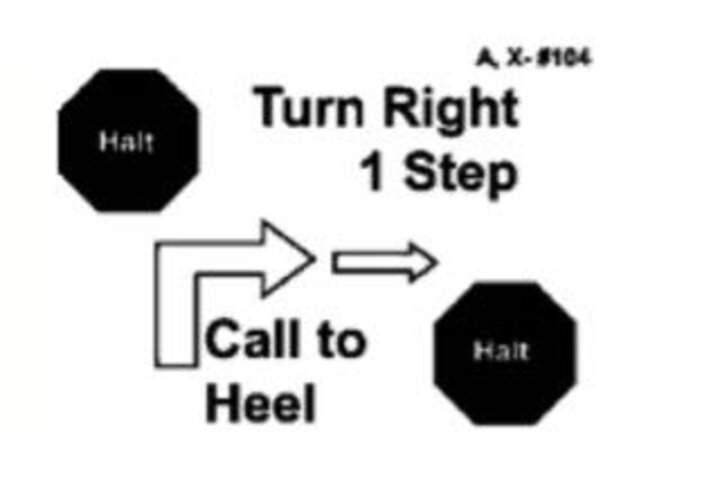
104. Halt- Turn Right One Step-Call to Heel-Halt – Handler halts and dog sits. With the dog sitting, the handler commands and/or signals the dog to stay. The handler then turns to the right, while taking one step in that direction, and halts. The dog is directed to heel position and must move and sit in the new location before moving forward to the next station. (Stationary exercise) |
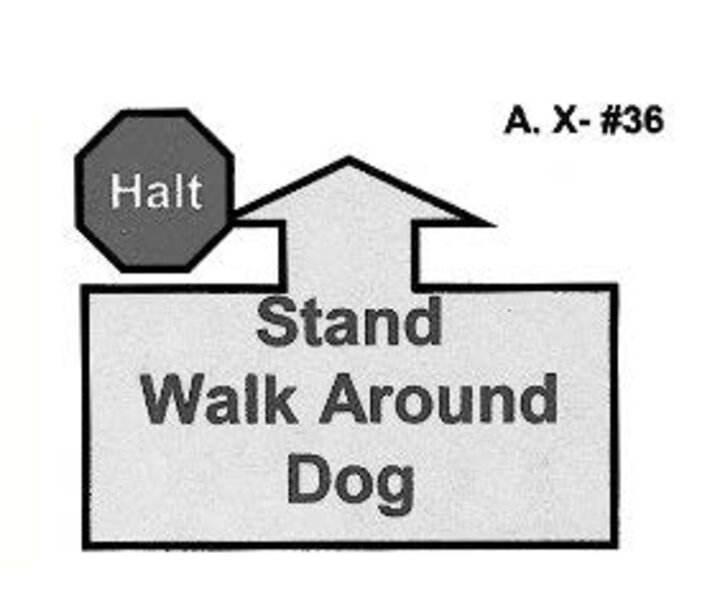
105. Halt-Stand-Walk Around – Handler halts and dog sits. With the dog sitting in heel position, the handler stands the dog and commands and/or signals the dog to stay as the handler walks around the dog to the left, returning to heel position. The handler must pause in heel position before moving forward to the next station. The handler may not touch the dog. |
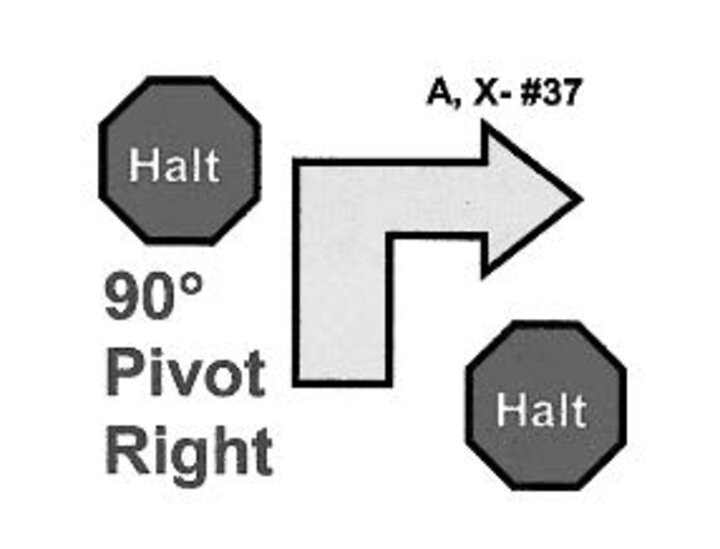
106. Halt- 90° Pivot Right-Halt – Handler halts and dog sits. With the dog sitting in heel position, the handler pivots 90° to the right and halts. The dog moves with the handler and sits in heel position. (Stationary exercise) |
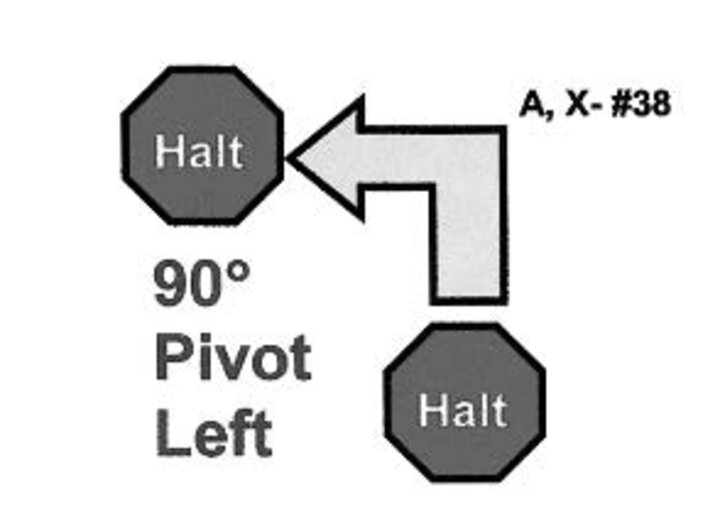
107. Halt- 90° Pivot Left-Halt – Handler halts and dog sits. With the dog sitting in heel position, the handler pivots 90° to the left and halts. The dog moves with the handler and sits in heel position. (Stationary exercise) |
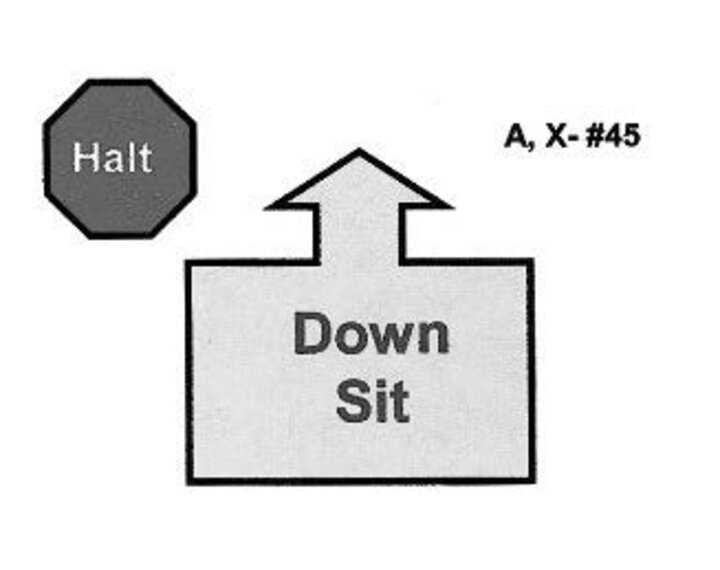
114. Halt-Down-Sit – Handler halts and dog sits. With dog sitting in heel position, the handler commands and/or signals the dog to down, then to sit. (Stationary exercise) |
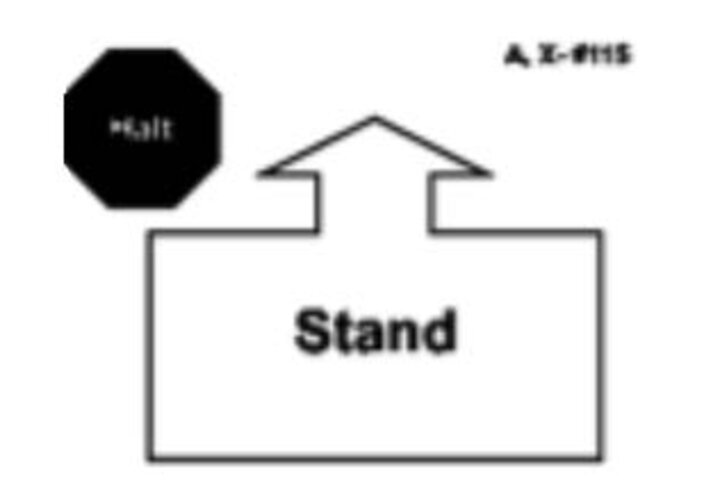
115. Halt-Stand – Handler halts and dog sits. With the dog sitting in heel position, the handler will stand the dog. Handler may touch the dog, move forward to stand the dog and may pose the dog as in the show ring. Handler then resumes heel position while the dog stands in place. |
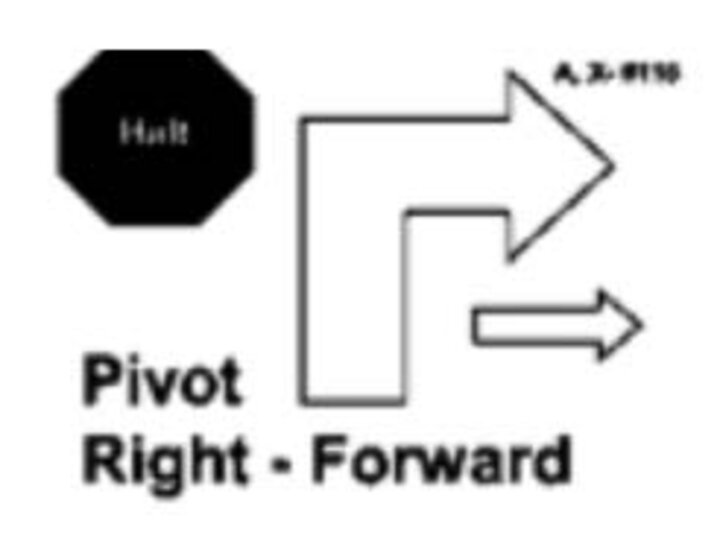
116. Halt-Pivot Right-Forward – The handler halts, and the dog sits in heel position. The handler commands and/or signals the dog to heel, then pivots to the right and dog and handler move forward. (Stationary exercise) |
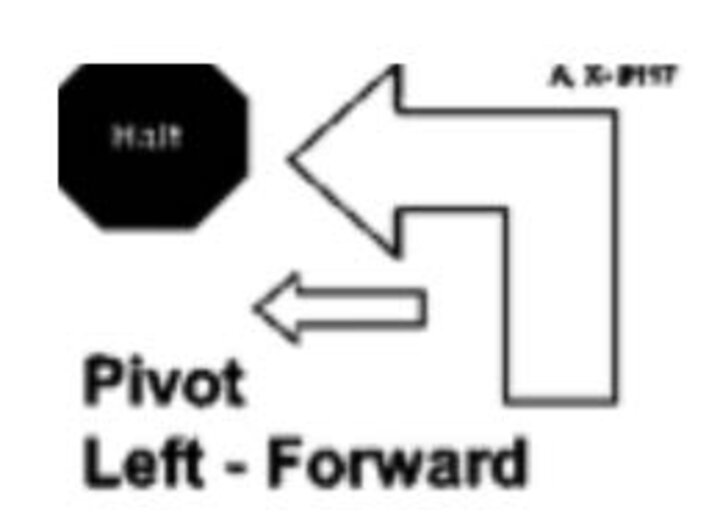
117. Halt-Pivot Left-Forward – The handler halts, and the dog sits in heel position. The handler commands and/or signals the dog to heel, then pivots to the left and dog and handler move forward. (Stationary exercise) |
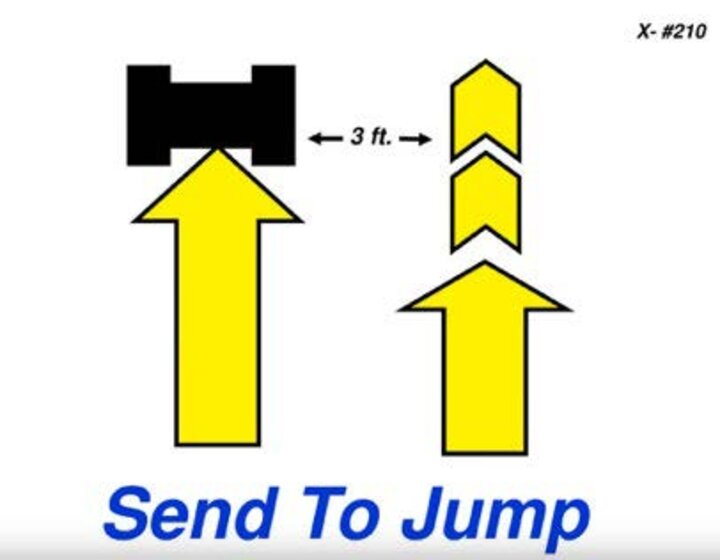
210. Send to Jump-At the sign the dog must leave the handler to jump. The dog must clear the jump on the first attempt, in the proper directions without stopping. The handler must remain at least 3-feet away from the jump and may not pass the jump until the dog has returned to heel position. The jump could be the bar jump, high jump, or the broad jump. |